
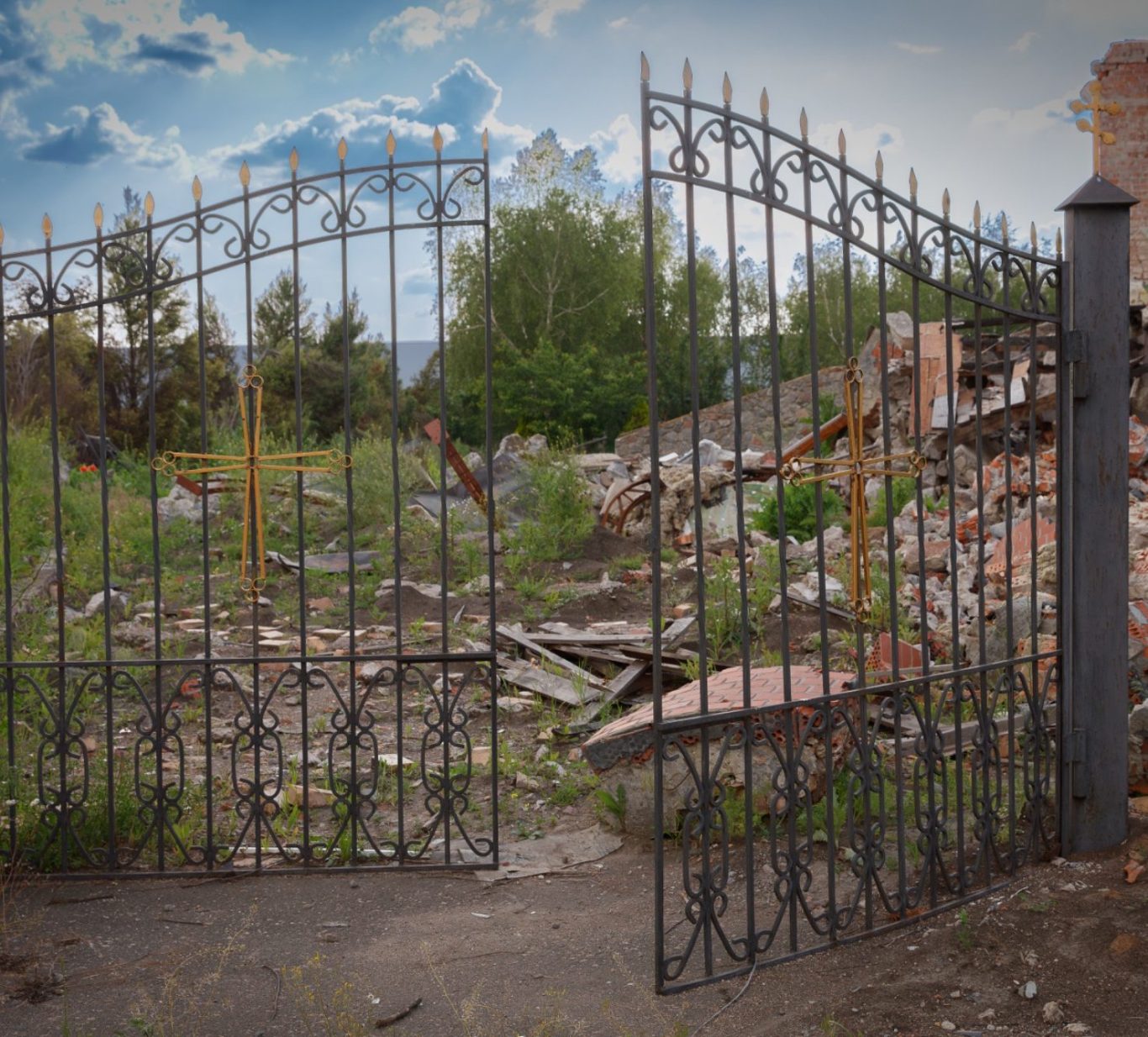
WHAT REMAINS WHEN
WAR TOUCHES EVERYTHING??
WHAT REMAINS WHEN WAR TOUCHES EVERYTHING?
A civilian mission. An archive. A system built from pressure.
Some stories should not be squeezed into a single update.
Not because they need to be made bigger than they are. The opposite is true. Some events only begin to make sense when you take the time to place them side by side: the photos, the routes, the messages, the people, the animals, the meals, the silence after impact, the exhaustion in people’s faces, and the small practical things that become essential when war reaches ordinary life.
Subaka was built around that kind of story.
This is the story of a long civilian mission in Ukraine. Not told from a comfortable distance, not from a short visit, not from a few dramatic images followed by a return to safe streets, fresh coffee and opinions from the couch.
This story comes from a reality where help had to be practical, repeated and delivered again and again.
Food had to arrive, phones had to work, people needed to wash, medics had to keep moving, soldiers needed a place to sit, even for a moment, volunteers had to keep functioning, families needed to hear something, and animals still needed to be fed, because even war does not seem to know when enough is enough.
According to Edward Nevada’s mission record, his Ukraine civilian mission began on 22 November 2022 at 12:00, during the period when Colonel Leonid Khoda was commander of the 1st Separate Tank Brigade Siverska of the Armed Forces of Ukraine. The mission was successfully closed on 20 April 2026 at 21:59.
The full mission period lasted 41 months. Within that period, Edward Nevada spent approximately 32 months working almost continuously inside and near active war zone pressure, often within 0 to 25 kilometres of frontline pressure. For American readers, that is approximately 0 to 15.5 miles, or 0 to 27,300 yards.
Rotations were limited. During those 32 months, Edward Nevada returned to the Netherlands only three times for medical recovery, each time for approximately six weeks.
This was not a short visit, not symbolic volunteering and not distant support from a comfortable distance. It was long civilian work in and near active war conditions, where daily life depended on trust, delivery, communication, discipline, timing and practical decisions under severe pressure.
The wider context is just as hard. Russia’s full scale invasion began in February 2022, and by February 2026 the UN Human Rights Monitoring Mission in Ukraine reported more than 15,000 civilians killed and more than 41,000 injured since the start of the full scale invasion. In 2026, the UN estimated that 10.8 million people in Ukraine would need humanitarian assistance, while the UN and partners appealed for 2.3 billion dollars to reach 4.1 million of the most vulnerable people. These are not abstract numbers. They are the background pressure behind every small practical act that kept someone moving.
In the last 25 kilometres before the frontline, ordinary logistics became something else entirely.
A hot meal was not just food, it was recovery. A shower was not just comfort, it was dignity. A washing machine was no longer a household appliance, it became a small piece of frontline infrastructure.
A phone, a laptop, a generator, a drive, a message and a contact person became links in a system that helped people stay upright when almost everything around them was under pressure.
That is what Subaka will publish.
Not war as spectacle, not heroism as decoration, not polished stories where everything fits neatly because someone cleaned up the truth afterward.
This is about what remains when people keep going under pressure.
NOT A POLISHED WAR STORY
Most war stories are simplified too quickly.
On one side, there are the big words: freedom, courage, resistance, survival. On the other side, there are the images: smoke, damaged homes, mud, vehicles, uniforms and faces that have seen too much.
Somewhere between those two, the real story often disappears.
The real story is in the repetition. Cooking again, driving again, calling again, checking again whether someone is still alive, making another plan even though yesterday’s plan already fell apart.
It is in the people who are not asking whether something looks impressive enough for an audience. They are asking simpler, harder questions.
Did it arrive? Does it work? Who needs it? Who is missing? Who can still continue?
Subaka preserves and publishes that reality carefully, with respect for safety, privacy and the people who could be put at risk by too much detail. Not everything can be public, not everything should be public, and not everything belongs online, no matter how loudly the internet pretends curiosity is the same thing as permission.
That is why this archive will be published with delay, selection and protection where needed.
No sensitive locations, no operational details, no unnecessary exposure of vulnerable people, no staged drama.
What remains is stronger than sensation.
It is a human archive.
THE STORIES BEHIND THE IMAGES
Behind every image, there is a situation.
A column of smoke above a field is not just a photograph. It is a day when someone had to decide whether a route was still possible.
An elderly woman in a village is not just a portrait. She carries history, loss, stubbornness and survival in one face.
An animal near a damaged place is not there to make the story softer. It shows that tenderness can still exist, even in a landscape that seems to have stopped making room for it.
A vehicle is not just transport. It is timing, risk, fuel, trust, maintenance, weather, route choices and someone waiting at the other end.
A meal is not just a meal. It is heat, calories, care, order and the basic message that someone has not been forgotten.
A message home is not just communication. It can be the difference between panic and breathing again.
The online stories of Subaka will take readers into those layers.
You will read about the civilian side of war: food, transport, medical support, communication, improvisation, trust and the fragile systems that keep people moving.
You will read about people who kept functioning while pressure built around their bodies, relationships, sleep, pain, faith in others and ability to remain calm.
You will also read about the home front, because war does not stop neatly at a border. It travels through phones, money, panic, silence, misunderstandings, exhaustion and relationships. While someone in Ukraine tries to keep working, people back home are left with fear, questions, uncertainty and the long emotional weight of not knowing what comes next.
That is part of the mission too.
Not as a side note, but as part of the whole story.
WHEN WAR TOUCHES INFRASTRUCTURE
War does not only damage buildings. It damages systems.
It breaks roads, power, heating, water, trust, sleep, family routines, medical access, communication and the quiet assumption that tomorrow will behave roughly like today.
The scale is not small. In 2026, the World Bank, the Government of Ukraine, the European Commission and the United Nations estimated that Ukraine’s recovery and reconstruction needs had reached 588 billion dollars over the next decade. That estimate reflects damage across housing, transport, energy and other essential sectors, which is a sterile way of saying that normal life itself has been hit.
Explosive remnants of war add another layer. The UN has warned that landmines, explosive remnants and improvised explosive devices continue to threaten lives, block rebuilding and hinder humanitarian work in Ukraine. That means the danger does not end when a strike is over. It remains in fields, roads, homes, water routes, ruins and everyday decisions.
This is why Subaka does not treat documentation as decoration.
Documentation matters because memory can be attacked, context can be lost, people can be exposed carelessly, and practical lessons can disappear if nobody takes the time to organize them properly.
WHY THIS ARCHIVE IS COMING ONLINE
There is a large archive.
Photos, videos, messages, memories, notes, names, places, events, field recordings and moments too vulnerable to throw online carelessly, but too important to let disappear.
That archive is now being turned, step by step, into a series of online documentary stories.
Not all at once, not raw and unprotected, not as a chaotic dump where the reader has to figure out what matters. The world already has enough digital junk lying around, apparently as a species wide hobby.
Subaka is building a series.
Short updates through the newsletter, longer stories on the website, deeper chapters behind a members only login, images with the context they deserve, and reflections on mission, trust, logistics, the home front, safety, privacy, sound, recovery and the human cost of continuing when ordinary systems fail.
The paid membership is not a tip jar for dramatic storytelling.
It is a way to publish this archive carefully: safely, independently, readably and with respect for the people inside it.
Anyone who wants a quick look can read the public pages. Anyone who wants to follow the real story should join the newsletter before launch. Anyone who wants the full online series will be able to access the deeper chapters through a paid members only account once the documentation goes live.
AUDIO, PRESSURE AND WHAT CANNOT BE SEEN
Some parts of war cannot be understood through images alone.
A photo can show damage, but it cannot fully carry pressure. It cannot show what blast does to the body, what repeated impact does to sleep, how silence changes after noise, or how a room feels when everyone is waiting for the next sound.
That is why Subaka is also building full spectrum audio work into the archive.
Where legally permitted and properly authorized, Subaka may record, organize and preserve full spectrum field audio from active war zones and high risk environments. This can include spatial audio, low frequency movement, blast pressure, room response, vehicle movement, infrastructure sound, environmental sound and the acoustic reality of a place under extreme pressure.
This work is not for battlefield intelligence, not for targeting, not for fire correction, not for surveillance and not for tactical planning.
It is for documentation, archive building, acoustic preservation, hearing related awareness, responsible analysis, public understanding and human impact research.
The purpose is simple: to preserve what a place carries in sound, pressure and space without exposing people carelessly.
Because sometimes the truth is not only what you see.
Sometimes it is what remains in the air after impact.
THE HOME FRONT IS PART OF THE STORY
The home front is not separate from the mission.
When someone works near pressure for months and years, that pressure travels. It travels through bad connections, unanswered messages, money problems, fear, medical recovery, misunderstanding, relationship strain, bureaucracy and the slow damage caused by never fully knowing what is happening.
Families carry part of the war without standing in the war.
Autistic people, sensory sensitive people, exhausted people, people recovering from trauma, people with chronic pain and people who depend on structure can be hit especially hard when systems become unstable.
Subaka was built from that reality too.
A safe account can matter. A clear document can matter. A predictable home environment can matter. Correct light, controlled sound, clean air, working power, stable communication and a calm system can matter more than another inspirational slogan thrown into the void like a cheap paper airplane.
This is why Subaka connects archive work with digital privacy, practical safety, communication structure, living environment technology and continuous support.
Not because everything is the same thing, but because in real life everything touches.
WHAT SUBAKA STANDS FOR
Subaka does not publish war as entertainment.
Subaka does not turn suffering into decoration.
Subaka does not claim military authority, intelligence authority, law enforcement authority or official government authority.
Subaka does not publish operational details, sensitive locations, private addresses, identifiable victim information, children’s details or vulnerable person details without a clear legal and ethical basis.
The work is civilian, practical and legally bounded.
Subaka documents carefully, protects context and separates fact, memory, opinion and interpretation.
That boundary is not weakness.
It is the reason the archive can be trusted.
JOIN BEFORE THE ONLINE LAUNCH
The mission has ended.
The story has not.
In the coming period, Subaka will begin publishing new chapters from the archive: stories from and around Ukraine, the frontline zone, civilian support, medics, volunteers, animals, the home front, trust, fractures, recovery, sound, privacy, practical systems and the lessons left behind when ordinary structures break down.
Before the full online documentation launches, newsletter subscribers will receive the first updates, previews and access information.
When the members only channel opens on the website, subscribers will be the first to know how to log in, become a paid member and follow the complete documentary series.
Not for sensation, not for quick opinions, not for another polished version of war made comfortable for people far away.
But to understand what happens when war touches everything, and people keep delivering anyway.